PETRIFIED
I gained some great experience throughout the course of this project. While initially I'd intended for something less ambitious, after I went through the trouble of rigging up a mouse for the sequence, I thought I might take the opportunity to try out the new film and television features which were being introduced in Unreal Engine at the time. Epic provided some excellent tutorials as well as CG Dive, Arrimus 3D, Chris Brejon, Ben Wilson, and Mold3D as linked to in the description of the embedded Youtube video.


This was the Storyboard for the PETRIFIED sequence. Though I didn't know it at the time, this along with an asset list were lifesavers when it came to keeping things organized.


These clay pots are made up of simple geometry and reuse existing trim textures already in memory when rendered. Trim variants for each mesh are stored on unique UV Channels selectable in Material Instances after exposing the Coordinate Index.


Using Blender's annotation tools I was able to sketch out the general layout of this platform damage according to some reference images found online. This approach also allowed for cutting through existing trim detail without smoothing or other issues.


When creating sets of assets like these candles, Blender helped to quickly iterate on variants non-destructively using a combination of modifiers, particle systems, and constraints, before retopo, unwrap, and baking.

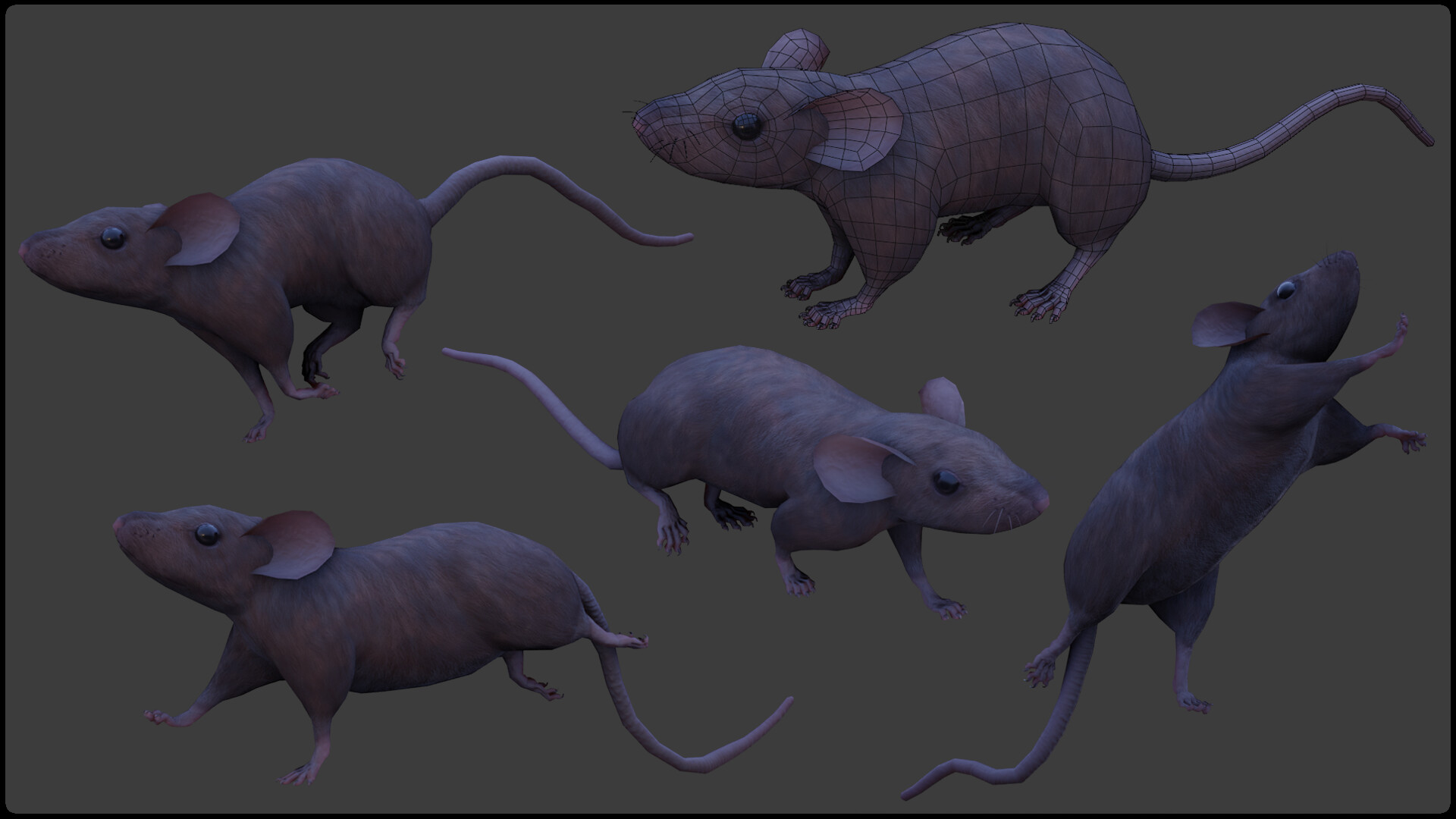
This is a collage of poses and keys from the mouse at its base sub-division level. Most Shots in the sequence used one additional sub-division level.

Persus' Xiphos.


Various channels of the trim sheet used throughout the environment. Height was used for parallax occlusion mapping.


Though the Inside Unreal demonstrations for compositing Object ID Layers given by Epic make use of Nuke, a similar result can be achieved within Davinici Resolve's Fusion workspace.
